
The Story of Himalayan Salt
250 Million Years in the Making
Long before the Himalayas became the world's tallest mountain range, the region was covered by a vast primordial sea. As tectonic plates collided and the earth's crust folded upward to create these massive peaks, ancient seawater became trapped and isolated from the ocean.
Over millions of years, that water evaporated, leaving behind thick deposits of crystallized salt. Unlike modern ocean salt exposed to contemporary pollutants, these deposits remained sealed beneath layers of rock and ice—protected, pristine, and undisturbed for over 250 million years.
The result is what we know today as Himalayan salt: one of the purest forms of salt on earth, containing not just sodium chloride, but a full spectrum of 84 trace minerals including iron, magnesium, potassium, and calcium. It's the iron oxide content that gives authentic Himalayan salt its distinctive pink-to-orange coloring—a signature that cannot be replicated or faked.
Why Pakistan Is the Only Source
Despite its name, "Himalayan salt" doesn't come from just anywhere in the Himalayan mountain range. Authentic Himalayan salt comes exclusively from the Khewra Salt Mine and surrounding deposits in the Punjab region of Pakistan—the second-largest salt mine in the world.
This specific geological location contains the ancient salt beds formed during the Precambrian era. While other regions may have salt deposits, only Pakistan's Khewra region possesses the unique combination of geological history, mineral composition, and crystalline structure that defines genuine Himalayan salt.
Any product labeled "Himalayan salt" that doesn't originate from Pakistan is, at best, mislabeled—and at worst, artificially colored rock salt or synthetic material designed to deceive buyers who don't know the difference.
Traditional Mining Heritage
Salt mining in Pakistan's Punjab region has been documented for over 2,000 years, though the deposits themselves likely remained largely untouched by human activity for most of earth's history. Local communities have passed down mining knowledge through generations, developing techniques that balance extraction with preservation.
Today, mining operations in the Khewra region employ a combination of traditional hand-mining methods and modern safety protocols. Unlike industrial strip mining that devastates landscapes, salt extraction here follows the "room and pillar" method—removing salt in sections while leaving structural pillars intact to support the mine's integrity.
Miners work in chambers carved deep within the mountain, identifying and extracting the highest-quality salt crystals by hand. This selective approach ensures that only premium salt reaches the surface, while the mine's infrastructure remains stable for future generations.
The work is physically demanding and requires intimate knowledge of the salt's natural formation patterns. Experienced miners can assess crystal quality by sight and touch, selecting pieces with the ideal mineral content, density, and structural integrity for various uses—from culinary applications to the hand-carved lamps and decorative pieces we offer.
From Mine to Masterpiece: The Art of Hand-Carving
Once extracted from the mine, raw salt blocks begin their transformation into functional art. This is where traditional craftsmanship becomes essential.
Local artisans—many whose families have worked with Himalayan salt for generations—hand-carve each piece using techniques refined over decades. For natural formation lamps, the goal is to preserve the crystal's organic beauty while creating stable bases and hollowing interiors for lighting elements. The artisan must read the salt's natural grain, working with its structure rather than against it.
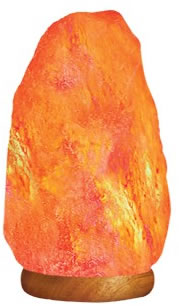
For sculptural pieces—teardrops, pyramids, globes, and geometric forms—the process requires even greater precision. The artisan shapes the salt gradually, understanding how the crystalline structure responds to tools and how to achieve smooth surfaces without compromising the material's integrity.
Culinary products like serving plates and shot glasses demand the thickest, densest salt crystals. These pieces are carved, ground, and polished to create functional surfaces that can withstand temperature changes and repeated use. Each plate or glass is inspected for structural soundness and mineral consistency.
Throughout the carving process, artisans make thousands of small decisions: where to remove material, which natural features to preserve, how to balance aesthetic beauty with practical function. No two pieces are ever identical—each bears the subtle marks of the hand that shaped it and the unique mineral composition of its particular crystal.
This isn't mass production. It's skilled labor that honors both the material and the geological history it represents.
Why Authenticity Matters
The market is flooded with products falsely marketed as "Himalayan salt." Common deceptions include:
- Dyed rock salt from other regions, colored pink with artificial pigments
- Synthetic materials molded to look like salt crystal
- Low-quality salt from non-Himalayan sources, misleadingly packaged
- Processed and reconstituted salt pressed into lamp shapes
These imposters lack the mineral composition, crystalline structure, and purity of genuine Himalayan salt. More importantly, they undermine the livelihoods of the Pakistani miners and artisans who depend on legitimate trade.
When you purchase authentic Himalayan salt products, you're not just buying a lamp or a serving plate—you're supporting:
- Traditional mining communities in Pakistan
- Artisan craftspeople preserving cultural heritage
- Sustainable extraction practices
- Transparent, ethical supply chains
- The preservation of one of earth's oldest natural resources
Our Commitment to Authenticity
Every product we offer comes directly from Pakistan's Himalayan region. We work exclusively with trusted suppliers who can document their salt's origin and who employ ethical mining and carving practices.
We never enhance, dye, or artificially alter our salt. The variations in color, size, and shape you see across our products aren't quality control issues—they're proof of authenticity. They're evidence that you're holding a piece of geological history, shaped by millions of years of pressure and heat, extracted by skilled miners, and carved by artisan hands.
This is what genuine looks like. This is what real means.
When you bring a piece of Himalayan salt into your home—whether it's casting warm amber light in your bedroom, presenting sushi at your dinner party, or soaking in your bath—you're connecting with an unbroken chain: ancient seas, geological forces, traditional mining, artisan craftsmanship, and your own space.
That connection matters. That story is worth preserving.
Learn More
Explore our collection of authentic Himalayan salt lamps, hand-carved sculptural pieces, culinary serveware, and bath and body products—each one a genuine piece of Pakistan's Himalayan heritage.
All products sourced directly from Pakistan's Khewra Salt Mine region | Hand-carved by skilled artisans | 250 million years in the making